
When I tell my non-writer friends (NWF) that I sometimes drive eleven hours between Marpennsylginia and Georgia without ever turning on the radio, they cock their heads in wonder as though they’re trying to figure out this phenomenon.

Their next question: “You travel with someone?”

“No, I travel alone,” I respond, even though that’s not quite the truth.

NWF: “But what do you do without music and talk radio?”

Me: “I work.”

NWF: “You work?!  How do you do that?”

Sigh…where to begin?

What my NWFs can’t grasp (because their minds are normal, their thinking healthy) is that a writer is working when he’s driving down the road…and when she’s staring out the window, and when he’s mowing the lawn, and…you get the point.

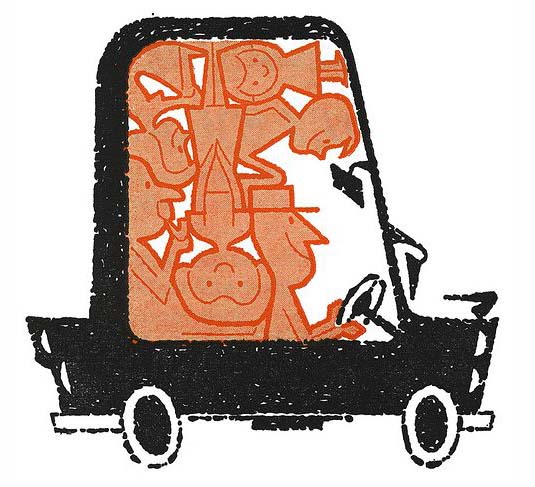
And yes, as for driving alone, I told a little white lie.  It’s easier to say I’m alone than to face the glazed looks my NWFs shoot me when I tell them that my car is actually quite crowded―with at least six of my key characters.

What’s more, these six characters all talk at the same time.  They reveal their personality traits.  They demand more page space from me.  They talk and argue with one another, which of course means that at the next rest stop I have to write down their comments because I generally forget to pack my tape recorder.

At least 50 percent of the novel I recently completed was plotted and took shape on Routes 81 and 95, somewhere between Winchester, Virginia and Savannah, Georgia.

My first non-fiction book was developed almost 18 years ago on Route 70 between central Maryland and southern Pennsylvania.

I wrote this blog entry when I stopped for lunch just north of Charlotte, North Carolina, on my way to Georgia.

I can’t imagine what I’d come up with if I ever drove across country.


 ”I can’t write without a reader. It’s precisely like a kiss…you can’t do it alone.” – John Cheever


Dear Editors:

I know you vehemently dislike “ly” words.

You unapologetically have made that brutally clear at each conference I’ve dutifully attended, and with each painstakingly written work of mine that you’ve heartlessly, err, wisely rejected.

Fortunately, I finally and earnestly get that.

Truly, I do.

Honestly.  Genuinely .  Sincerely.

So, I enthusiastically promise to strongly do my best to systematically eliminate “ly” words when I see them.

In fact, this will be my gift to the world.  Zealously, I’ll start now:

Famous Novel: “Frankly, my dear, I don’t give a damn.” – Sorry, Rhett, now you’ll have to say, “Scarlett, you’re a hottie, for sure, but I just don’t care anymore.” (Um, offensive language must go too, I’m told.)

Book Title: “The Lovely Bones” – (Really?! But it’s an adjective!)  We’ll just change that title to “The Good-looking Bones.”

Mark Twain quote: “Love—The irresistible desire to be irresistibly desired.”  Ooops!  And this from the man who said that he never wrote “metropolis” for seven cents because he could get the same price for “city”!   The rewrite: “Love—The irresistible desire to be desired in a charming and alluring way.”

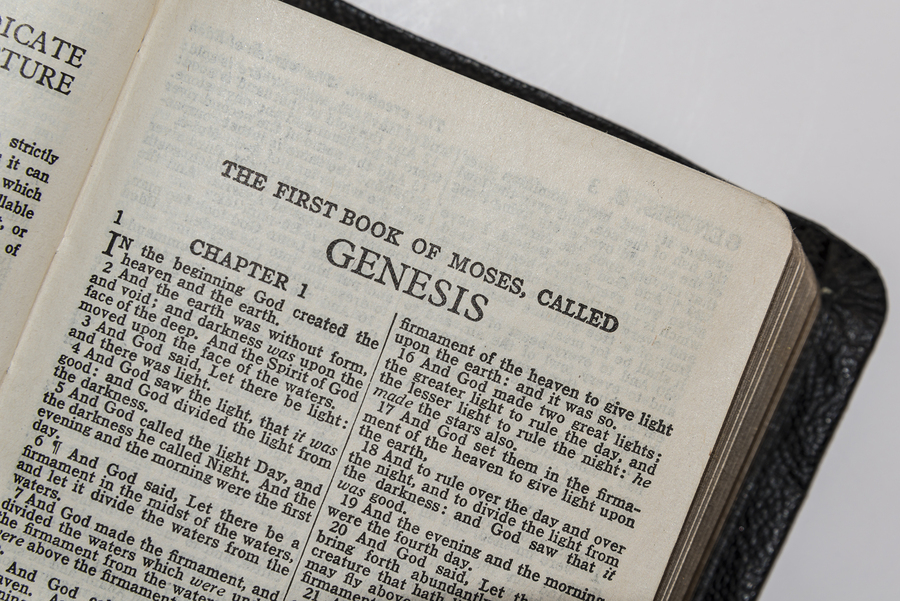
The Bible:  “Surely goodness and mercy shall follow me all the days of my life…”  Oh my! I guess it will now have to read: “It is with unmitigated certainty that I know goodness and mercy shall follow me all the days of my life.”

And there you have it—decidedly stronger writing!

Thanks for reading so diligently, dear editors.  Trust that, going forward, I’ll be categorically eliminating the world’s prose of “ly” words when and where I see it.

I’m absolutely looking forward to my new role.

Definitely!

Stay tuned for next week’s posting: “Dwn wth vwls.”

Public Service Announcement:  An Adverbs Support Group will meet this Friday at the home of Willy (umm, William) Kavanaugh.    Dr. Lesly (umm, Leslie) Mitchell will deliver a talk on “The Genocide of Adverbs,” followed by a discussion of plans to lobby Congress  for a stimulus package for adverbs.   Hope to see you there!


Hanging on Their Every Word

Hanging on Their Every Word

If you write, then you’re a writer. Grab the label and run!

But please carry it, and all your labels, lightly.

Here’s why….

Picture it: You’re cruising along peacefully in your new red-hot Jaguar (hey, it’s my visual), feeling smug about being in control of the road when you suddenly realize you’re about to miss your exit unless you get into that very congested right-most lane.

Being the good driver you are (and you wear that label proudly), you glance quickly into the rearview mirror and—Eureka!—you see nothing blocking your passage. So, you move smoothly into the lane.

You feel like a NASCAR driver.

But wait! Where’s that horn coming from?

Next thing you know a maniac driver is sidling up on your left, offering a choice gesture, and calling you a #!@*!

Ooops, you forgot about that teeny, tiny blindspot on the right side of your car; you know that spot—the one that only manifests itself when there IS a car in the way.

Whoa! So now you’ve been labeled a #!@*!

Now the question becomes, “Do you believe that you are a #!@*! ?”

Chances are you’re no more a #!@*! than I am.

So, you label the guy a jerk because he obviously doesn’t know you made an innocent mistake. He’s a hothead, an idiot, why he’s a #!@*! himself!

In a moment, we have a case of dueling labels being tossed back and forth, up and down the highway.

Fortunately, none of these labels stick. You don’t dissolve in shame or waste brain cells working to overcome your supposed inadequacy as a driver.

Much to our credit, in situations like this, we have enough internal awareness to ignore the labels we’re assigned.

Why then, when it comes to other labels that are just as inaccurate and improperly assigned, do we become vulnerable and stressed by focusing too strongly on them?

And, on the reverse, why do we become obsessed with securing certain labels…..like writer?

Best advice: Don’t give others permission to condemn or label you. Carry your labels lightly—both those you despise and those you like. The former are damaging, while the latter are fleeting like fine chocolate: good while they last, but not worth fretting over when gone.

Bottom line: Jesus was labeled a glutton and a drunkard because he spent time with tax-collectors and sinners (Matt 11:19; Luke 7:34). He ignored those labels because he cared more about pleasing God than impressing the flitting culture of his time.

We would do well to follow his lead.